
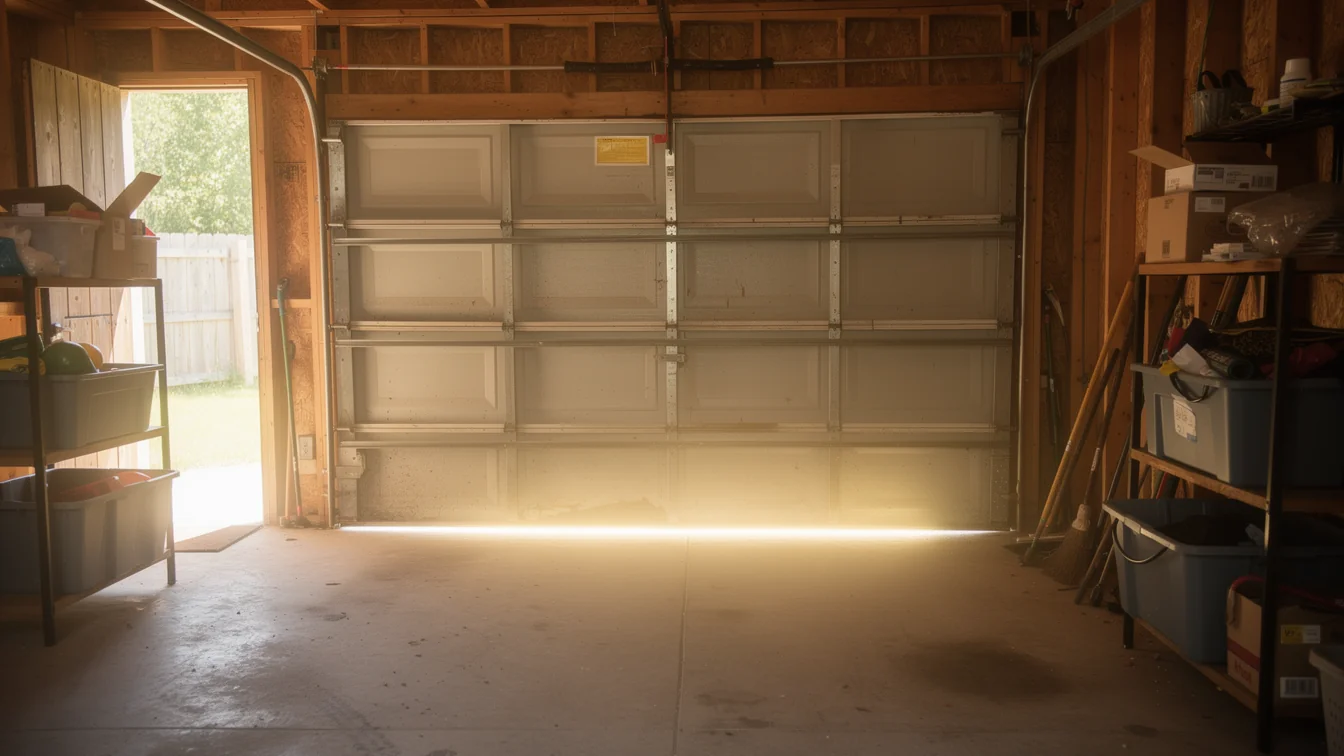
Uninsulated Garage Doors on Port Saint Lucie's Older Housing Stock
Most Port Saint Lucie garage doors date to the 1969-1993 building boom, before insulation requirements existed.
Read moreWhy a torsion spring can still snap on a cold morning in Port Saint Lucie, even though this service area rarely sees hard freezes, and what the 1980s housing stock means for the repair.
Local detail
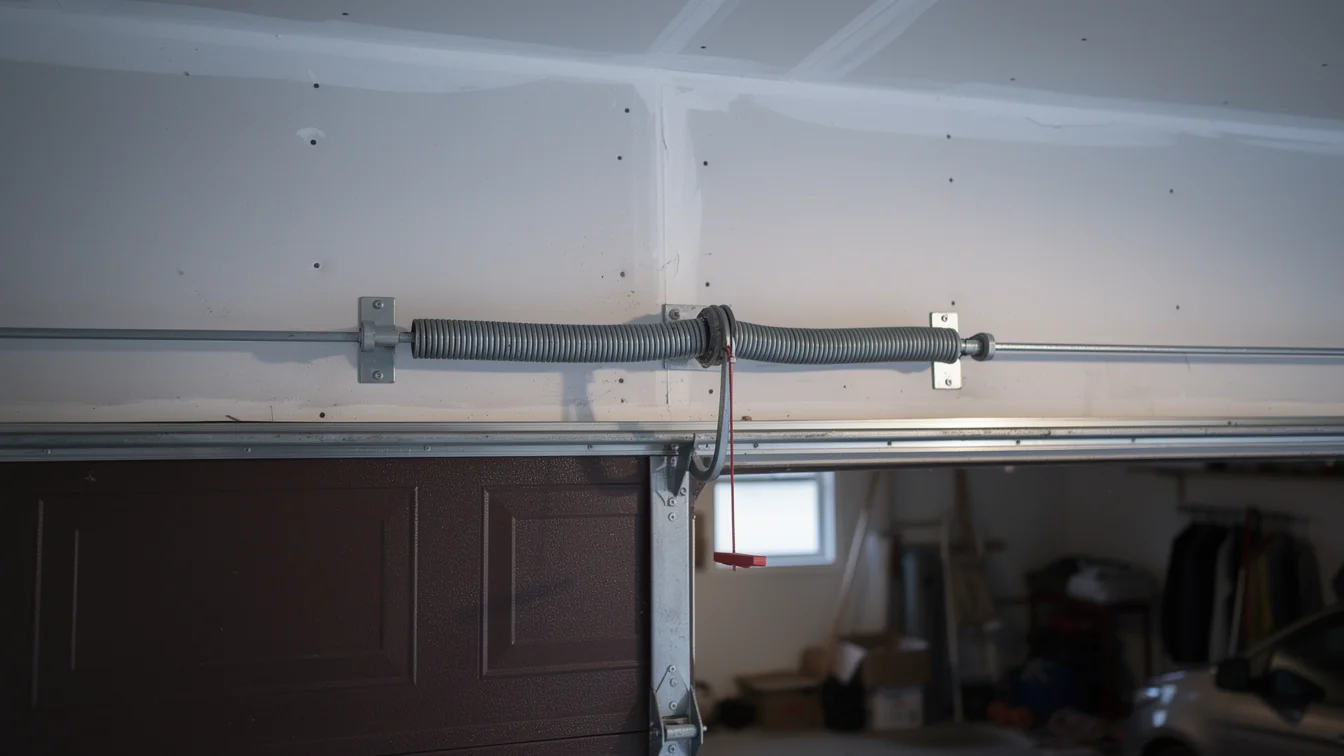
Port Saint Lucie sits in a mild temperate band, so the deep cold snaps that crack steel springs overnight in northern climates almost never happen here. That's the good news. The less obvious news is what this area's housing does instead. Most houses across the twelve areas we cover - River Park, White City, Saint Lucie West, Indian River Estates, and the rest - were built between 1969 and 1993, with the median landing around 1983. That means a lot of torsion springs out there are original or close to it, pushing toward forty years of open-and-close cycles.
Steel fatigues with use long before it fatigues from a cool snap. A spring rated for roughly 10,000 cycles doesn't care much whether the morning is 75 degrees or 45 - it cares how many times it's been wound and unwound. What a cold front does here is nudge the air a little drier and a little stiffer, and that's sometimes enough to be the final straw on a spring that was already down to its last few hundred cycles. The weather isn't the cause. It's the trigger on something that was already worn thin.
The area
If a spring breaks and you leave the door as-is, the opener is now trying to lift the full weight of the door with no counterbalance. On the older torsion setups common in this area's 1980s and 90s builds, that strain goes straight into the opener's drive gear and the top bracket. Keep running the opener and you're often turning a spring job into a spring-plus-opener job.
The other risk is the door itself. Without the spring holding tension, a door that's partway open can drop fast if the cable or track takes any load it isn't built for. On houses from this era, that hardware has had decades to loosen, rust at the rollers, or just wear past factory tolerance. We'd rather you leave the door shut and call than try to force it up by hand to get a car out.
Waiting a day while you schedule a repair isn't dangerous by itself. Waiting weeks while using the opener anyway is how one broken part becomes three.
What we find
Here's the typical version of this call: overnight temperatures drop into the 40s on a passing front, and the next morning the door won't move, or it moves and then bangs down. Nobody was using the door any differently than the week before. What changed is that the spring was already near the end of its service life - again, that 1969-1993 housing stock means a lot of original hardware out there - and the slightly stiffer steel in cooler air was enough to finish the job.
This isn't a seasonal event the way it would be somewhere with real winters. We don't see a spike of calls every January. What we see is springs failing on whatever morning happens to be the coldest one in a given stretch, because that's the morning the steel has the least give left in it. If your door is original to a house built in the 70s, 80s, or early 90s and you haven't had the spring replaced, age is doing more work here than the thermometer is.
How we work
We're not going to put a number here that doesn't hold up once we're standing in front of your door. Spring replacement cost depends on the door's weight, whether it's a single or double, what size and type of spring your particular setup needs, and whether the drums, cables, or bearings are worn enough to need replacing at the same time - which is common on hardware from the 1980s and 90s housing stock that makes up most of this area.
What we can tell you is what drives the price up versus down: a straightforward single-spring swap on a standard door is one job, and a double-torsion setup with worn bearings and a cable that's starting to fray is a different job entirely. If your spring is original to a house built before the early 90s, budget for the possibility that more than the spring needs attention. We'd rather tell you that upfront than quote low and find the rest once the door's apart.
Questions
Not the way it does up north. Our climate is mild temperate, so we don't get the hard freezes that crack steel outright. What happens instead is that a spring already near the end of its life - often original to a house built in the 1969-1993 range - gets pushed over the edge on whichever morning happens to be coolest.
Only if the door stays down. Once a torsion spring breaks, the door has no counterbalance, and on older hardware common in this area the cables and brackets weren't built to take that load repeatedly. Leave it shut, use the manual release if you need the car out once, and call.
Likely, yes. The opener's drive gear isn't built to lift the full weight of a door. Keep running it without a working spring and you risk turning a spring repair into a spring-and-opener repair, especially on older units that came with houses built decades ago.
Recommendation
More garage door guides for Port Saint Lucie homeowners.
Most Port Saint Lucie garage doors date to the 1969-1993 building boom, before insulation requirements existed.
Read more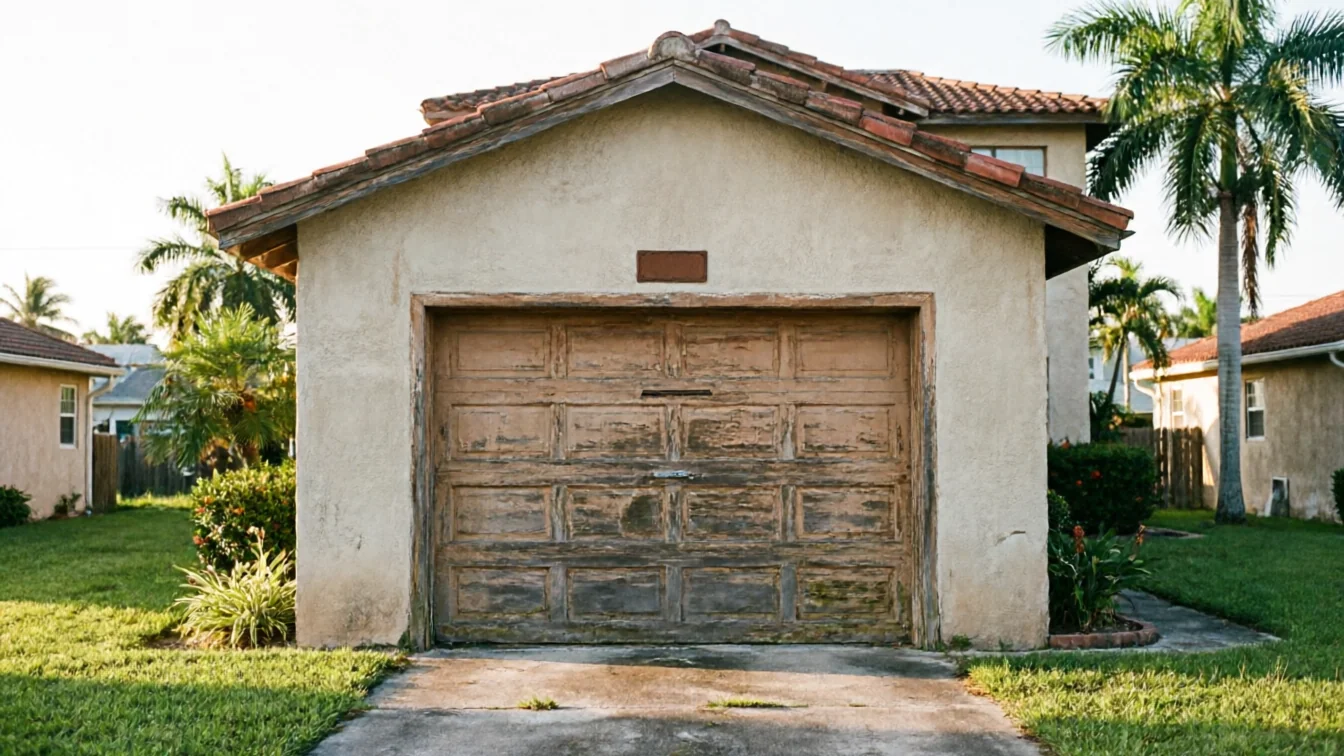
Port Saint Lucie's housing stock runs 1969-1993.
Read more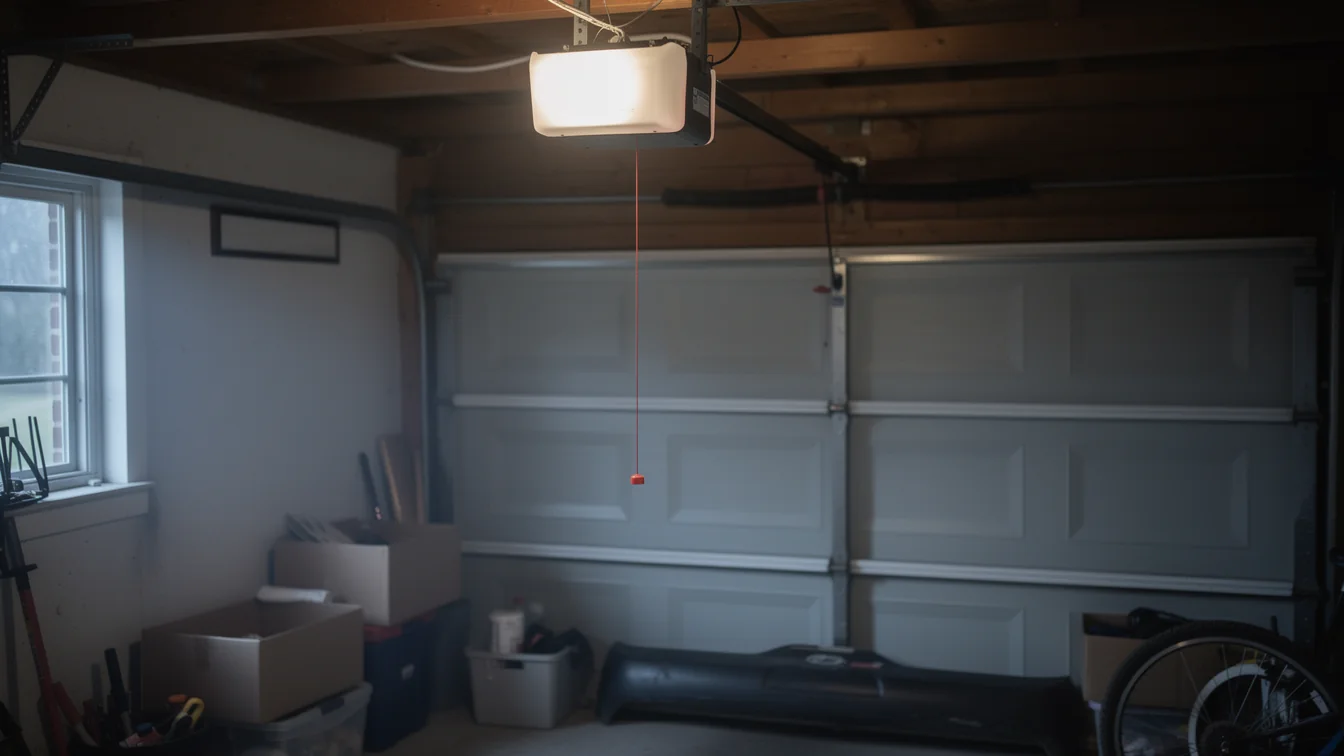
Most Port Saint Lucie houses date to the 1969-1993 build era, and that shapes how openers fail when the power drops.
Read moreReady when you are
Port Saint Lucie Garage Door Pros repairs and installs garage doors, springs and openers in Port Saint Lucie, FL and the surrounding area.